Honing and sharpening the blades of your kitchen knives in a regular basis is mandatory to keep them in good condition for long time, but how to sharpen them? To do this, you have several sharpening tools available here at MyChefKnives.co.uk, among which you can find:
- Whetstones: perfect for sharpening Japanese knives
- Sharpening steels: perfect for quickly sharpening the knives in professional kitchens
- Manual sharpeners: quick and easy sharpening
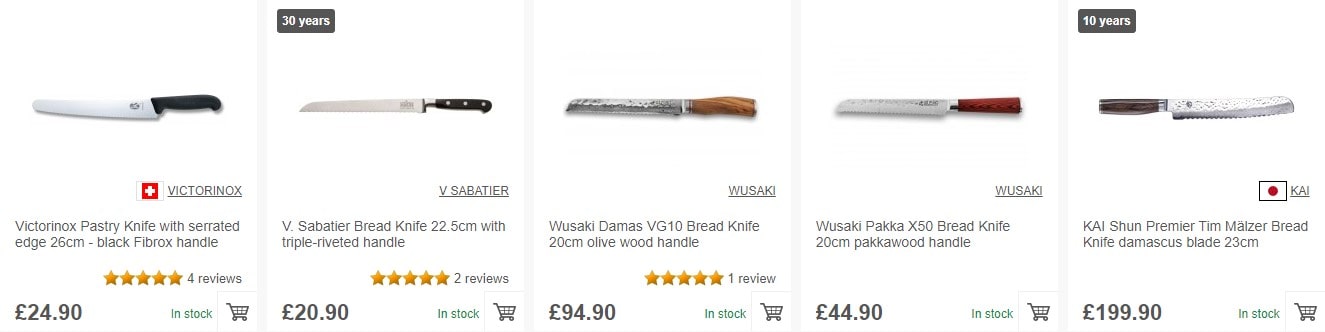
Therefore, you have a bunch of options to sharpen your favorite kitchen knives of different sizes. However, the sharpening accessories mentioned above are mainly designed to sharpen knives with plain edges such as a chef knife, a paring knife, or a boning knife. But, what about serrated knives like bread knives? This type of kitchen knife is present in almost every kitchen, but how to hone its blade remains a mystery for most cooks.
Fret not! MyChefKnives is here to help you. There are many solutions to sharpen a bread knife, but to be clear, we should first tell you that a serrated blade does not lose its sharpness as quickly as a plain blade. It is not surprising to find serrated knives that have been used for several years and continue to cut well despite not having been honed once since it was unboxed.
Below are some methods that will help you to maintain the sharpness of a serrated blade:
First of all, you have to choose a ceramic sharpening steel with a diameter that can more or less fit into the gullets of your serrated blade. Then, you have to make sure tha you will hone the right side of the blade, because bread knives are sharpened only on one side. If you pay close attention to the edge of a serrated blade, you will notice that on one side you can clearly see the gullets or indentations on the steel, whereas the other side has a flat, plain surface. The side that you need to sharpen is the side where the teeth of the blade are.
This is a bit longer than sharpening a conventional plain blade because you have to sharpen every tooth of the serrated blade. You should also pay attention to the type of sharpening steel as the shape and delicacy of the steel is key to retaining the sharpness of the blade. As a precautionary measure, we request you to check the abrasiveness of the steel. Highly abrasive sharpening steels might damage the fine teeth, thus it is recommended to us a steel with fine grain (such as the ones used for polishing the edge of plain blades).

Now that you know what type of sharpening steel to use and which side of the blade to hone, it is time for action. The process is long is but simple: rub the ceramic sharpening steel between each of the gullets of the serrated edge. After some back and forth action, your blade will be ready. We advise placing the sharpening steel on a flat surface and striking the knife against the steel at a 13°- 17° angle. This way, the sharpening process will be more stable and secure.
Even though we think that sharpening each of your blade's teeth one by one with a sharpening steel is the most effective and durable way of honing a bread knife, we can't ignore the fact that there also exist other knife sharpeners especially adapted for serrated blades. For example, there are some manual sharpeners out there that are suitable for sharpening both plain and serrated blade, such as the AnySharp Pro Manual Sharpener.
The major advantage of these devices is that they have predefined slots which already have an angle for sharpening this type of blades. You just need to place the blade inside the specified slot and slide the knife back and forth until you achieve the sharpness. It is quick and easy for those who do not want to waste a lot of time sharpening each indentation on a serrated blade.
So there you have it; now you know that sharpening a bread knife is indeed possible. Although most serrated blades remain sharp for many years (if used under normal circumstances), you should not wait until the blade becomes dull to sharpen it. As soon as you notice that its edge is losing a bit of its sharpness, go ahead and hone it to keep it in good shape. This same principle also applies for plain blades.
Is there anything that you did not understand? Do you have another doubt? Whatever question you might have, remember that our team remains available to reply all your inquiries related to this article or any of the products on our website. You can send us a message by using our Contact page or by sending an email to hello@mcyhefknives.co.uk.